Logistics
Enterprise

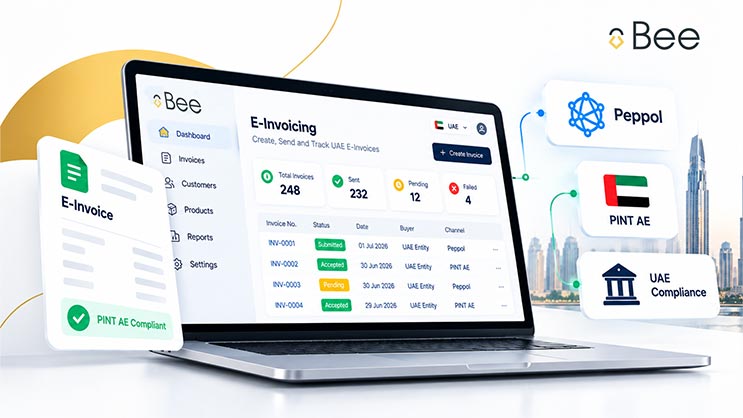
UAE E-Invoicing : Accredited Service Provider & Compliance
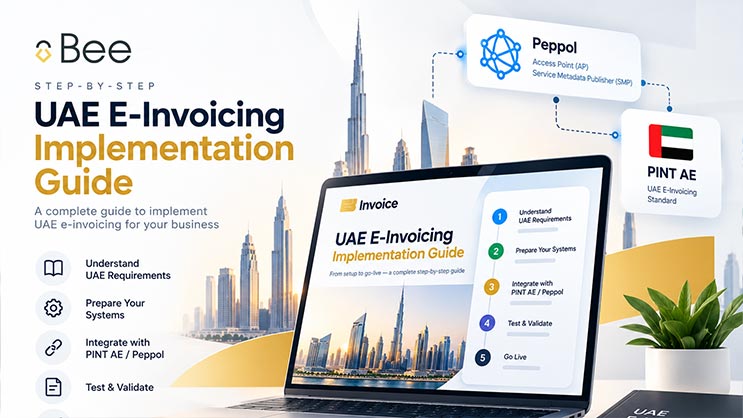
UAE E-Invoicing Implementation Guide
UAE e-invoicing implementation involves finance, tax, IT, ERP and service-provider workstreams. A successful implementation is not simply a software installation. It requires invoice-data review, field mapping, technical integration, validation, testing, exchange, response handling, monitoring and production support.
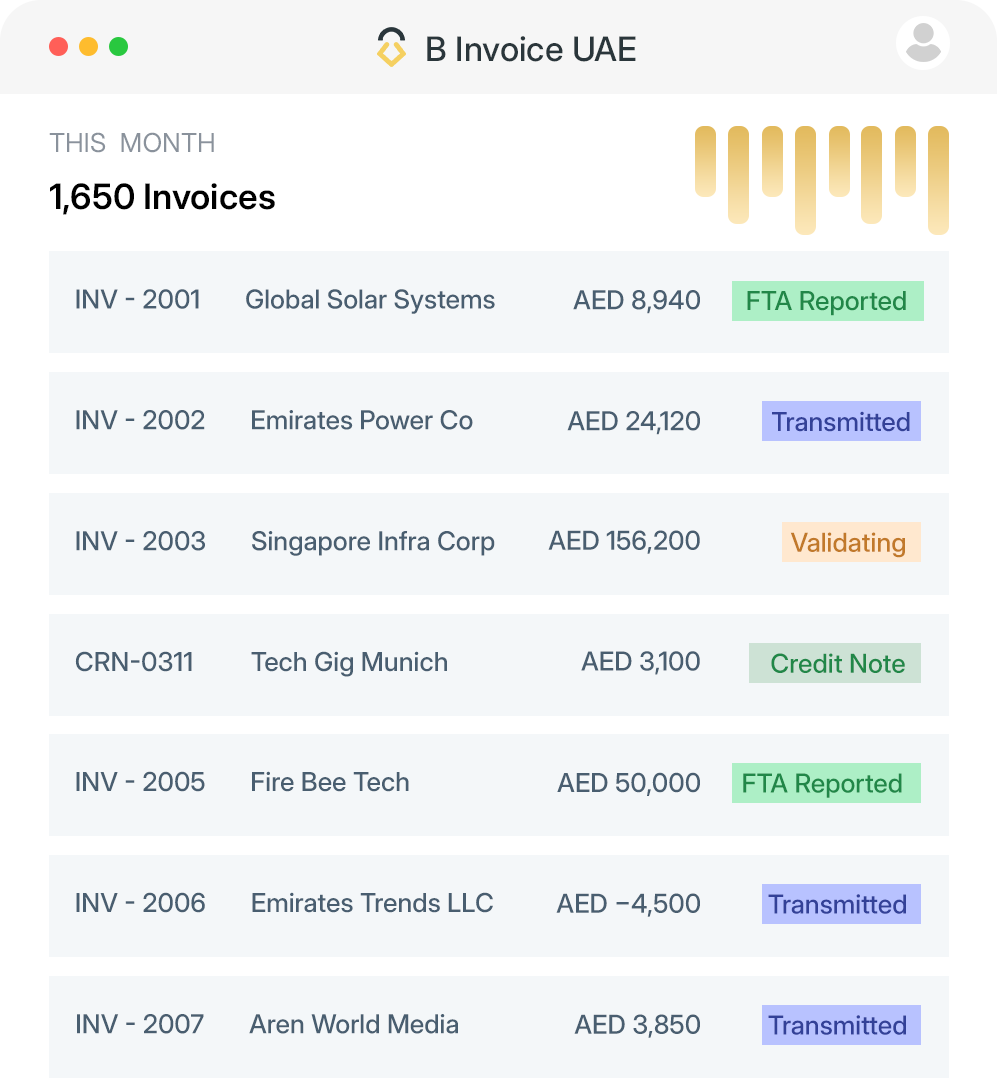


UAE e-invoicing implementation
Seven-Step Implementation Plan
- 01 - Identify the ERP, accounting platform and other systems that create or receive invoice data.
- 02 - Review invoice, tax, customer, supplier and master-data quality.
- 03 - Select the applicable service provider and confirm current regulatory/technical status.
- 04 - Map source-system fields to the applicable structured invoice requirements.
- 05 - Implement APIs, connectors or middleware and configure validation/error handling.
- 06 - Run end-to-end testing for invoice creation, validation, exchange, rejection, response and reconciliation.
- 07 - Move to production with monitoring, support procedures and change-management controls.
PINT AE and Structured Invoice Data
Data Mapping and Validation
Mapping is one of the most important implementation tasks. A source ERP may use internal field names or formats that differ from the structured e-invoice requirements. The implementation should define transformations, validation rules, error messages, retry behaviour and ownership of rejected documents.
UAE e-invoicing implementation
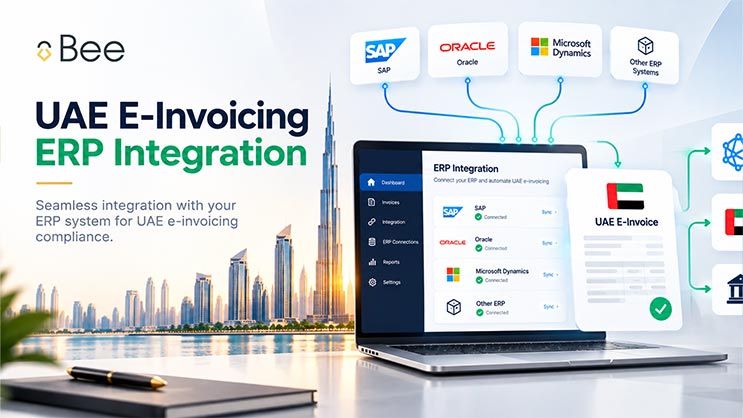
ERP Integration and Testing
- Unit-test mapping and transformation rules.
- Test tax and total calculations.
- Test buyer/supplier master data.
- Test retries and exception workflows.
- Document production support and escalation procedures.
- Test valid and invalid invoices.
- Test credit notes and referenced invoices.
- Test response/status handling.
- Test reconciliation between ERP records and e-invoice status.
UAE e-invoicing implementation
Current UAE Implementation Timeline
|
Entity / revenue category
|
ASP appointment
|
Mandatory implementation
|
|---|---|---|
|
Annual revenue above AED 50m*
|
30 Oct 2026 (latest MoF amendment)
|
1 Jan 2027
|
|
Annual revenue below AED 50m
|
31 Mar 2027
|
1 Jul 2027
|
|
Government entity in scope
|
31 Mar 2027
|
1 Oct 2027
|
UAE e-invoicing implementation
Voluntary Implementation
The UAE Ministry of Finance guidance states that voluntary electronic invoicing can begin from 1 July 2026. Businesses that adopt voluntarily still need to follow the applicable technical requirements. The official guidance also notes that administrative penalties apply from the date a person is required to implement mandatorily.
UAE e-invoicing implementation
Implementation Readiness Checklist
- Revenue category and implementation date confirmed.
- Invoice volume and document types documented.
- Tax data and invoice numbering reviewed.
- Provider and Peppol connectivity confirmed.
- Test cases prepared.
- Production cutover plan approved.
- ERP/accounting systems identified.
- Customer and supplier master data reviewed.
- PINT AE mapping plan prepared.
- Integration architecture approved.
- Monitoring and support process documented.
UAE e-invoicing implementation
Frequently asked questions
How long does UAE e-invoicing implementation take?
What teams should be involved?
Do we need to change our ERP?
Not necessarily. The preferred approach is generally to connect the existing ERP or business application to the e-invoicing workflow where supported.
What should be tested before go-live?
Not necessarily. The preferred approach is generally to connect the existing ERP or business application to the e-invoicing workflow where supported.
Can we start before our mandatory date?
Start Your UAE E-Invoicing Readiness Check
Explore B Invoice UAE E-Invoicing, or talk with our team about your implementation.
Related Information's
UAE E-Invoicing

UAE E-Invoicing Provider: What Businesses Should Look For