

Bee Aura Tech Corporation

UAE E-Invoicing : Accredited Service Provider & Compliance

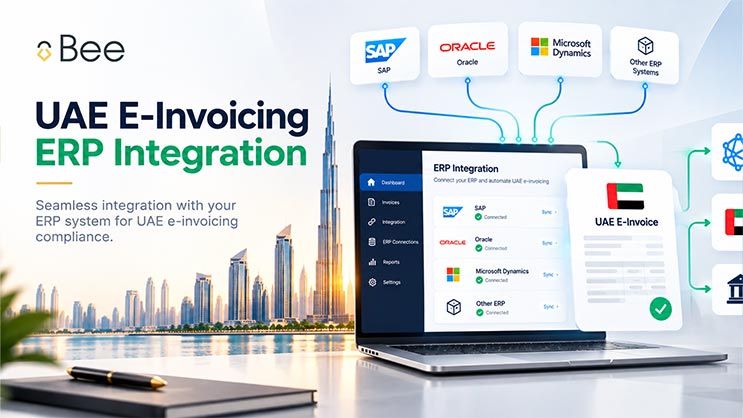
UAE E-Invoicing ERP Integration

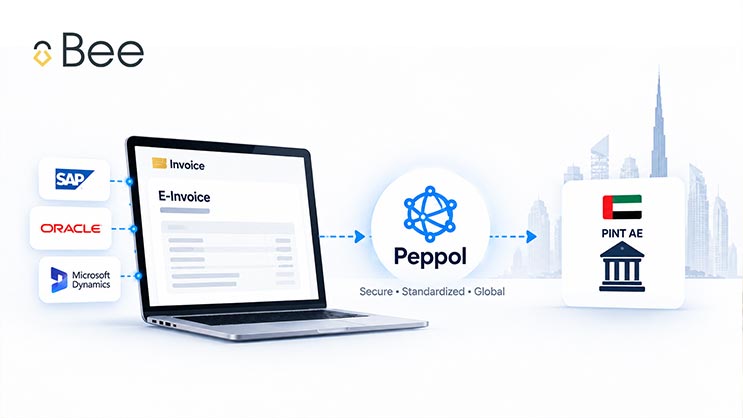
Your ERP is where invoices are created, approved and recorded. UAE e-invoicing should fit that workflow instead of forcing finance teams to recreate invoices manually. B Invoice can be positioned as an integration layer that connects the source system to the applicable UAE e-invoicing workflow.

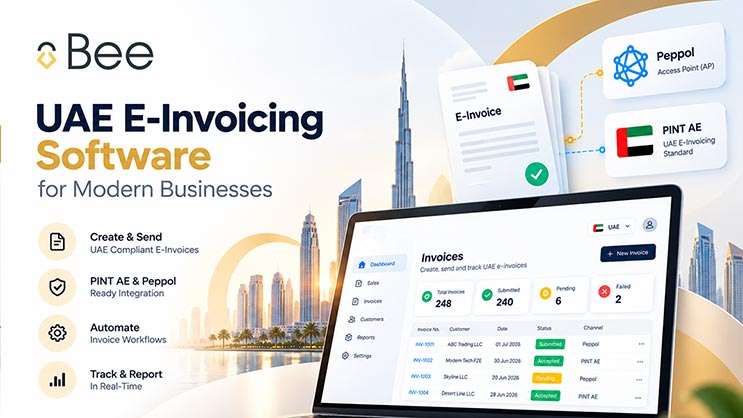
UAE E-Invoicing Software for Modern Businesses
API
safe
ERP
Tax

UAE e-invoicing ERP integration

How ERP Integration Works

1
ERP
2
Invoice Data / API

3
Mapping & Validation

4
PINT AE Structured Invoice

5
Service-Provider / Network Exchange

6
Response / Status

7
ERP Reconciliation

UAE e-invoicing ERP integration

ERP-Specific Integration

For SAP environments, the page should explain the actual supported architecture, data extraction method, mapping, API/connectivity layer, validation and status return. If the implementation supports SAP S/4HANA or SAP ECC, list those environments only after the product/technical team confirms them. Avoid publishing a long list of SAP versions merely for SEO.

For Oracle environments, explain how invoice information moves from the supported Oracle environment into B Invoice, how mapping and validation are handled, how the structured document is exchanged and how response/status information returns to the finance workflow.

For Microsoft Dynamics environments, explain the supported connector/API approach, field mapping, validation, exchange and status visibility. Keep the wording specific to the actual Dynamics environments supported by B Invoice.

Businesses without a standard ERP can still have structured invoice data in custom software, billing applications or industry-specific platforms. Where the B Invoice API supports it, the integration can send the required data, receive validation/exchange responses and maintain transaction status. Publish API claims only after confirming the current API documentation and production capabilities.

UAE e-invoicing ERP integration

Integration Architecture

Layer
Typical responsibility
Source ERP / Billing System
Creates invoice and owns business transaction data
Integration Layer
Extracts/maps/transforms source data
B Invoice
Validates and prepares the applicable structured e-invoice workflow
Peppol / applicable exchange
Transmits structured documents through the applicable network
Buyer / recipient system
Receives and processes the structured invoice
Status / response layer
Returns acceptance, rejection or other applicable status information
ERP reconciliation
Updates internal records and supports finance reconciliation

UAE e-invoicing ERP integration

Integration Questions to Ask

UAE e-invoicing ERP integration FAQ

Frequently asked questions

Can B Invoice integrate with SAP?

B Invoice can be positioned for SAP integration where the specific SAP environment and integration architecture are supported. Publish exact versions only after technical confirmation.

Yes where the specific Oracle environment and integration method are supported. The page should explain data flow, mapping, validation and status synchronization.

B Invoice can support Microsoft Dynamics environments where the required integration architecture is available. Confirm the exact product/version before publication.

API-based integration can support custom applications where the B Invoice API and implementation architecture provide the required capabilities.

The objective of integration is to minimize duplicate data entry by using invoice data already available in the source system.

Integrate Your ERP with UAE E-Invoicing

Explore B Invoice UAE E-Invoicing, or talk with our team about your implementation.

Related Information's

UAE E-Invoicing

UAE E-Invoicing Provider: What Businesses Should Look For

Peppol Service Provider in UAE for E-Invoicing

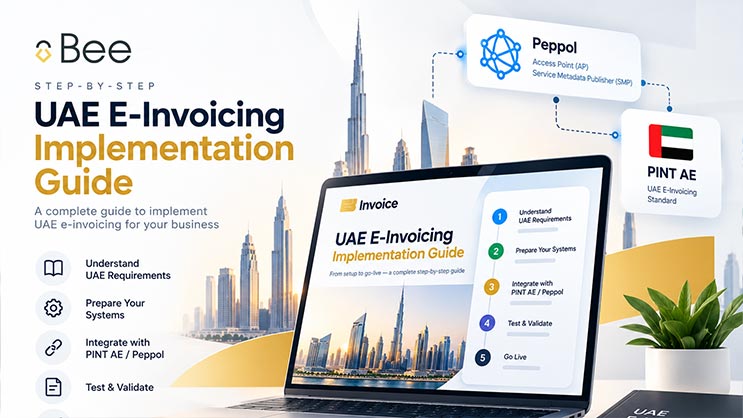
UAE E-Invoicing Implementation Guide

UAE E-Invoicing Software for Modern Businesses

UAE E-Invoicing ERP Integration

Need Help?